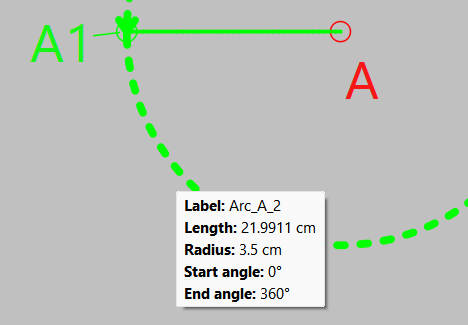
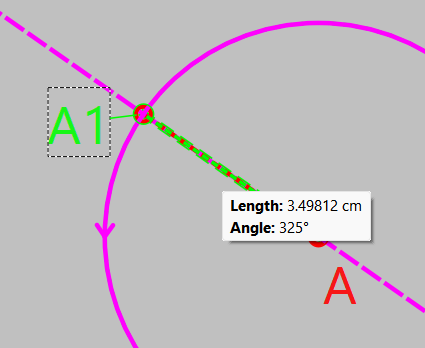
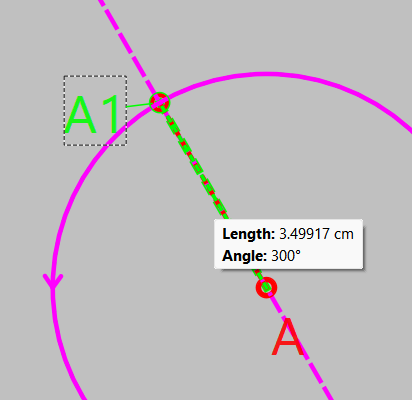
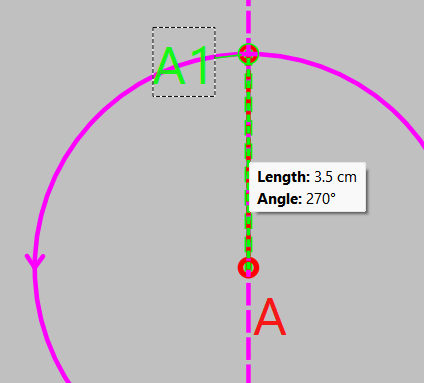
Notice how the line length at 90 and 180 is 3.5cm… where with the other 2 at different angles - using trig to calculate the length with rounding error each display a different length.
If we were to format the output with 2 decimal places they would all display 3.5 as the other 2 would get rounded up to 3.5. The use of real numbers and rounding are also most likely
at the root of some edge case issues related to the SA. For example… If we were to take the above and try and test if Line_A_A1 = 3.5… it will fail in many cases. So we have to use fuzzymath and test if Line_A_A1 = 3.5 ± 0.01 where in all cases we can them say they’re all close enough to be equal.
And yes… .001cm or .01 mm is negligent for our purposes.
“To put that into perspective, .01mm is 5 to 7 times thinner than a standard sheet of standard copy paper (which is about 0.005 cm to 0.007 cm thick) and roughly the thickness of a red blood cell or a strand of spider silk.”