Referencing unaligned angles

We have a friend too who is an old time tailor (retired) who owned a shop (Granelli & Son) with his father that mainly made pants. He could literally cut & finish a pair of pants in less than 30mins. In fact on many jobs we would just subcontract out the pants as it was just more cost effective. I’d always pick his brain when I could. :slight_smile:

Precisely. If the curves are interactive (i.e. have control points), the control points have to be formulized or the curves won’t adjust to changes in size.

Even though we had a lot of hat making machines, we had a local (uniform) hatmaker as well that when needed we would just have them make them. We also had a hat maker (who recently passed away) that made your typical dress hats like fedoras, etc. He helped us a lot when it came to rebinding, cleaning, steaming & reblocking hats. He made a lot of custom hats for Stage and Movies.

Unfortunately all my hat making books were destroyed in the fire along with everything else. :frowning: The only “hat” thing I have is a skull cap pattern I entered into Seamly.

Exactly. While basic measurements were used to establish the proportions, the style lines were more “art” than “science.” Of course what we’re attempting to do with Seamly is use more precise measurements with proper use of formulas to create a pattern that more accurate 3D garment.

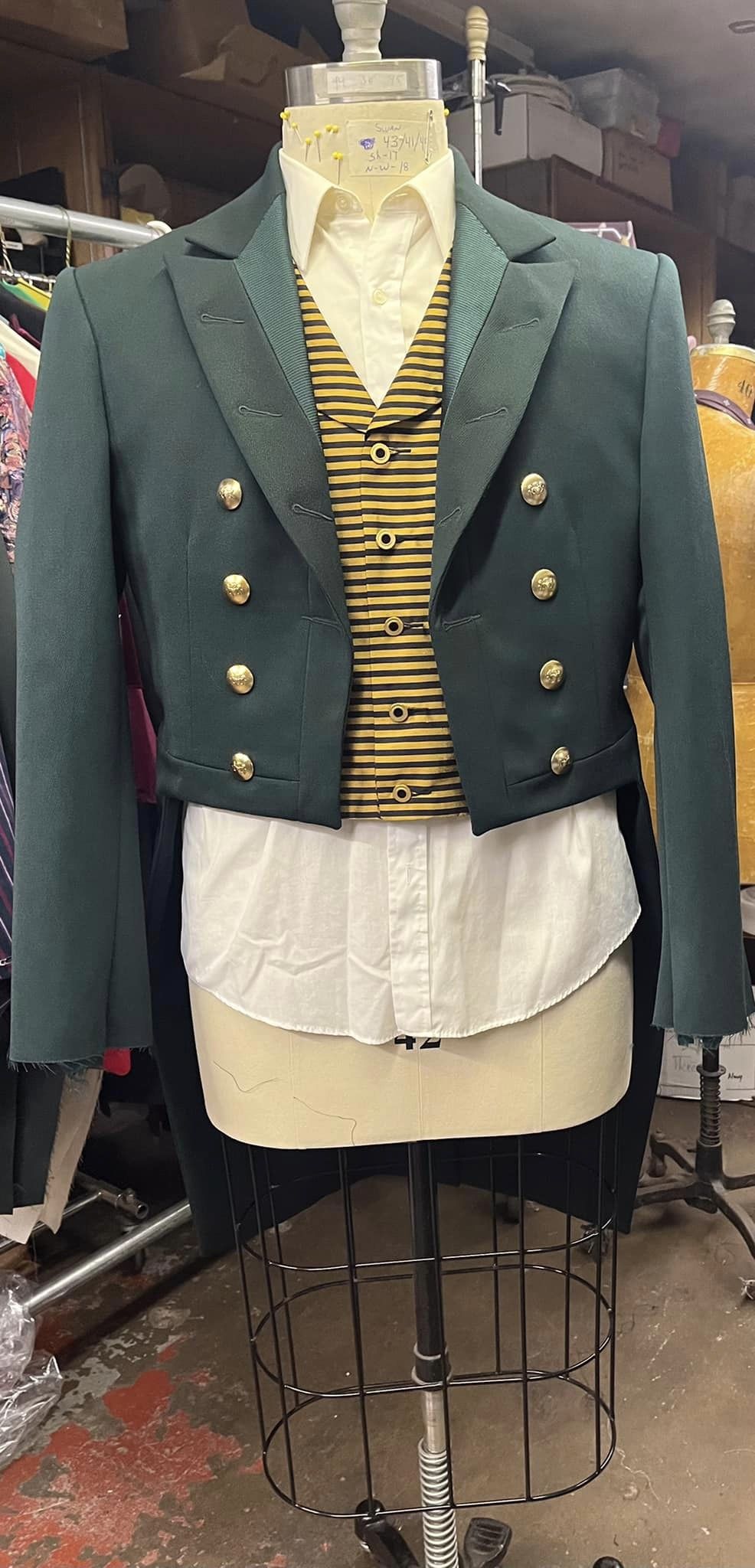
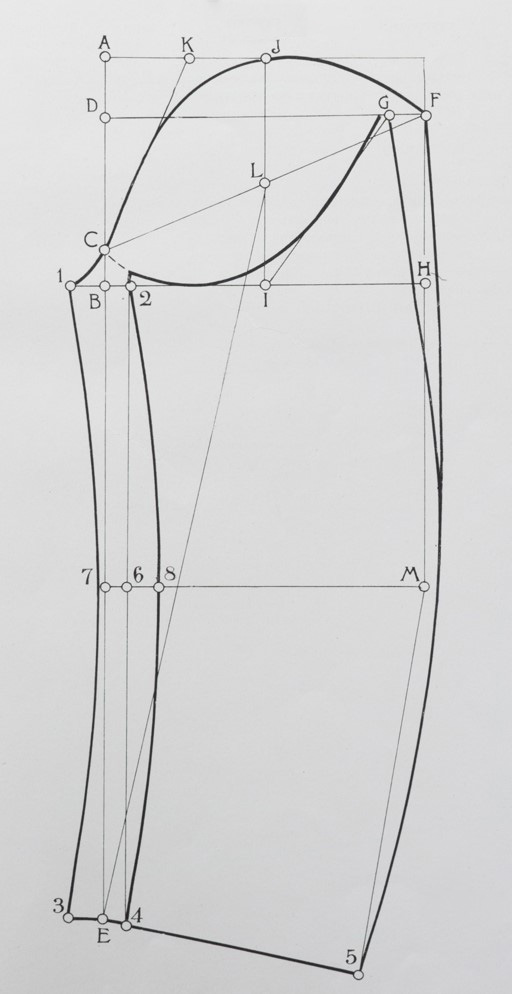
I would be consumed in my office - which use to consist of a 6x40ft cutting table - by periods from the 1700’s to present day. Last major job being Annie… such as the livery tailcoats based on the pattern in the The Blue Book:

5 Likes

I would be consumed in my office - which use to consist of a 6x40ft cutting table - by periods from the 1700’s to present day. Last major job being Annie… such as the livery tailcoats based on the pattern in the The Blue Book:

Let’s see what happens when I need to jump in and make 19th century coats… there have been a few requests, but I’ve pushed them away since… well, I just am not skilled enough for that yet. Perhaps once I’ve finished these few jackets I might try to make something for myself on my spare time… Though I’ll have to learn to properly fit myself in them.

Meanwhile:

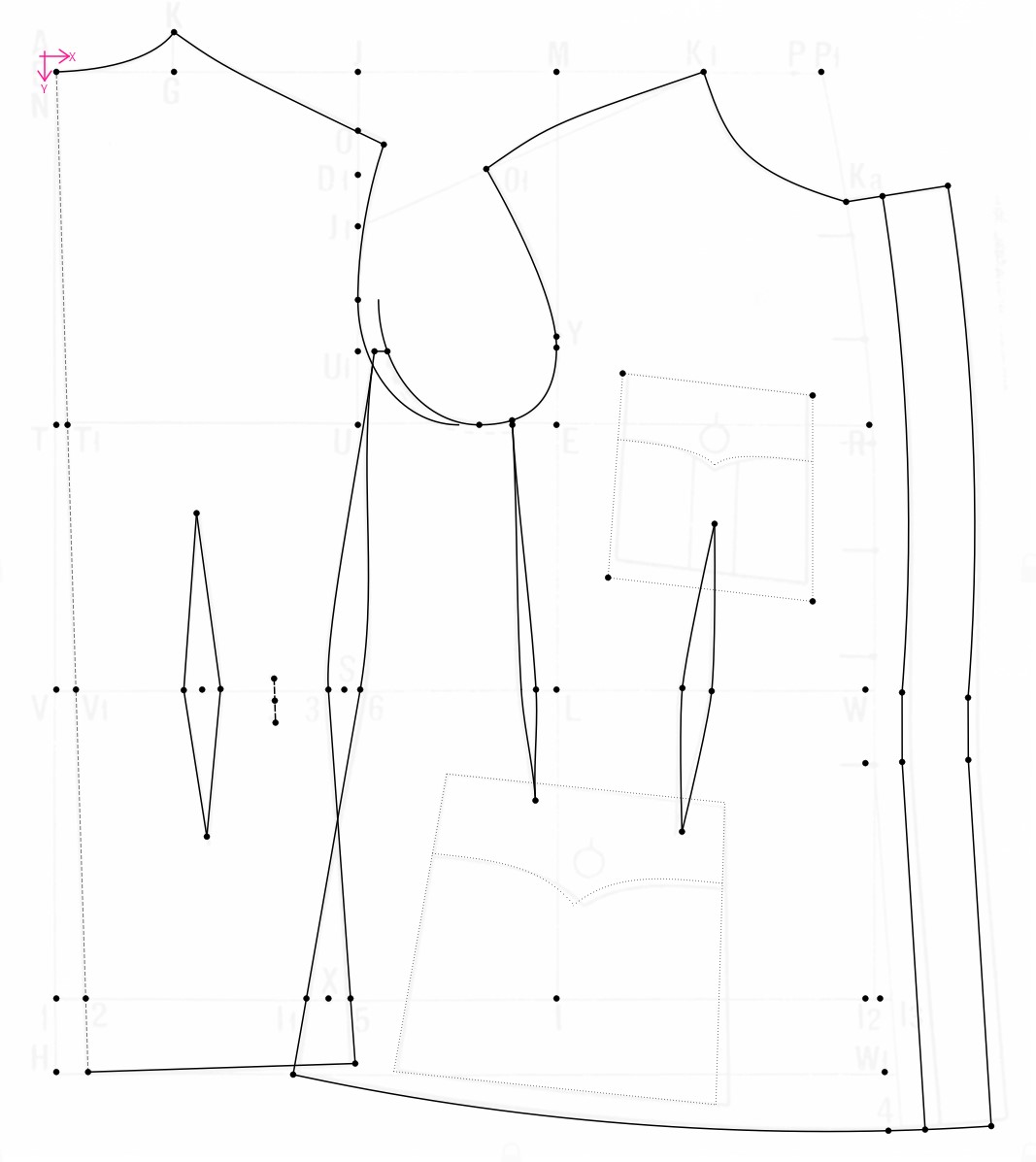
My draft has progressed to where all these lines are defined.

Today was a bit of a hurdle; I learned about a free web-only alternative Seamscape and decided to try it since it has a tool for 3-point-arc out of the box, but that software failed and simply ended up in non-stop calculations and crashed.

So I hopped back into Seamly, made some 3 point arc manually with extra guidelines for the chest.

While at it, I also made an arc for the hem that’s tangent to the back hem seam. I wasn’t satisfied with the angle it met the center front, so I decided to do what the sample drawing shows - changed the front side seam length from 1,5 cm to 2 cm. If I could figure out an easy way to offset the side seam lines, I could check if the seamline actually matches. The front side seam (cutline) being 2 cm longer at the bottom and nearly 1 cm at the top scares me… even with the offset sewing line, it might be too much ease. But we’ll see once I get the toile done.

Now I suppose I’ll have to check and confirm that the shoulder seams actually still match as well as the neckline. I’ll also need to mark some points along the side seam for the notches…

I just realized I’ll also have to manually adjust the measurements, so I can see if it works on a number of sizes nicely. While thinking about this, I also realized I’ll need to read how to make adjusted versions of this… some of the sizes are called “special sizes”, which are for a corpulent figure and I’ve yet to do that with these old patterns… nor have I done it digitally ever, I’ve only done that by hand.

Oh well, all in all this has been pretty exciting week. I’ve got something to look forward to next week!

3 Likes

@Lieckio , your pattern is looking amazing.

1 Like

Just create different measurement files. To change the size you just load a different messurement file.

Yeah… A corpulent pattern is a completely different draft. It has to account for the waist being larger than the chest.

3 Likes

@Lieckio , your pattern is looking amazing.

Thank you! I hope it is actually amazing when printed out as well!

Tomorrow I’ll be printing the first test pattern with my trusty 1988 pen plotter. Then it’s time to check if this actually works as is. I hope it does, as I am pretty eager to get to work with the sleeves already!

Just create different measurement files. To change the size you just load a different messurement file.

Ah, I never thought that this could be worked around that way!

2 Likes

For some reason I assumed that you could not change the size table / measurements on the fly, so I was stuck here thinking I’d have to just change these all by hand everytime I needed to change one. But this was excellent trick to make each size an individual file and then just load it. Works like a charm and I get to see easily how this works in a variety of sizes. I’m loving it!

2 Likes

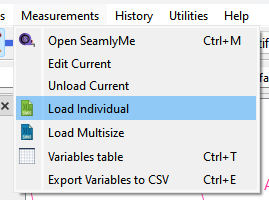
You can change the measurement file at any time:

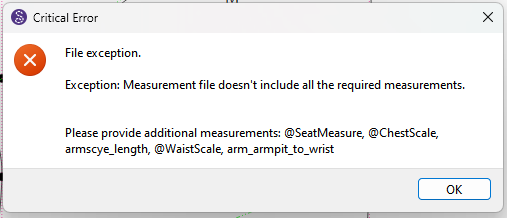
Just keep in mind that the measurement file you load has to contain the measurements used in the pattern. Or you will get this:

Personally I just used a measurement file that had all the 51 measurements we used on our normal measurement sheet at the shop so I never had a problem with missing measurements when switching to another actor’s file.

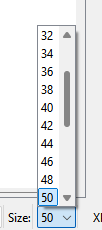
The other way to change sizes is to use a multisize measurement file. Where you setup a grading table with a range of sizes. You include a base size and increment up or down from that size. Then you can simply select the size you want in the size dropdown:

The downside with the current multisize is that the range of sizes are hard coded from 22 to 72 based on metric sizing . It works if you’re doing men’s jackets say sizes 34-52, but not womens dress sizes 6-16 where you would have to use like 26-36 with 26 really being a size 6, and so on. We will be addressing this at some point in the near future.

2 Likes

Personally I just used a measurement file that had all the 51 measurements we used on our normal measurement sheet at the shop so I never had a problem with missing measurements when switching to another actor’s file.

The other way to change sizes is to use a multisize measurement file. Where you setup a grading table with a range of sizes. You include a base size and increment up or down from that size. Then you can simply select the size you want in the size dropdown:

The downside with the current multisize is that the range of sizes are hard coded from 22 to 72 based on metric sizing . It works if you’re doing men’s jackets say sizes 34-52, but not womens dress sizes 6-16 where you would have to use like 26-36 with 26 really being a size 6, and so on. We will be addressing this at some point in the near future.

I can’t use the multisize measurement file, since the sizes don’t scale evenly.

Sizes 36 - 44 both have A & B sizes, from 46 to 56 you have A, B & C sizes, where the letter is height group, which is different for each size.

On top of that you’ve got D size from 46 to 56, which is the same as the B-size, except the waist is 6 cm larger. And then you have 58, 60 and 62 as extra beefy sizes as well.

But the changes from size to a bigger size are anywehere from 1 to 4 cm, with seemingly no logic behind them.

2 Likes

The pattern piece part of the job was a STRUGGLE. Took me a while to get these things set up as well as I got them done now.

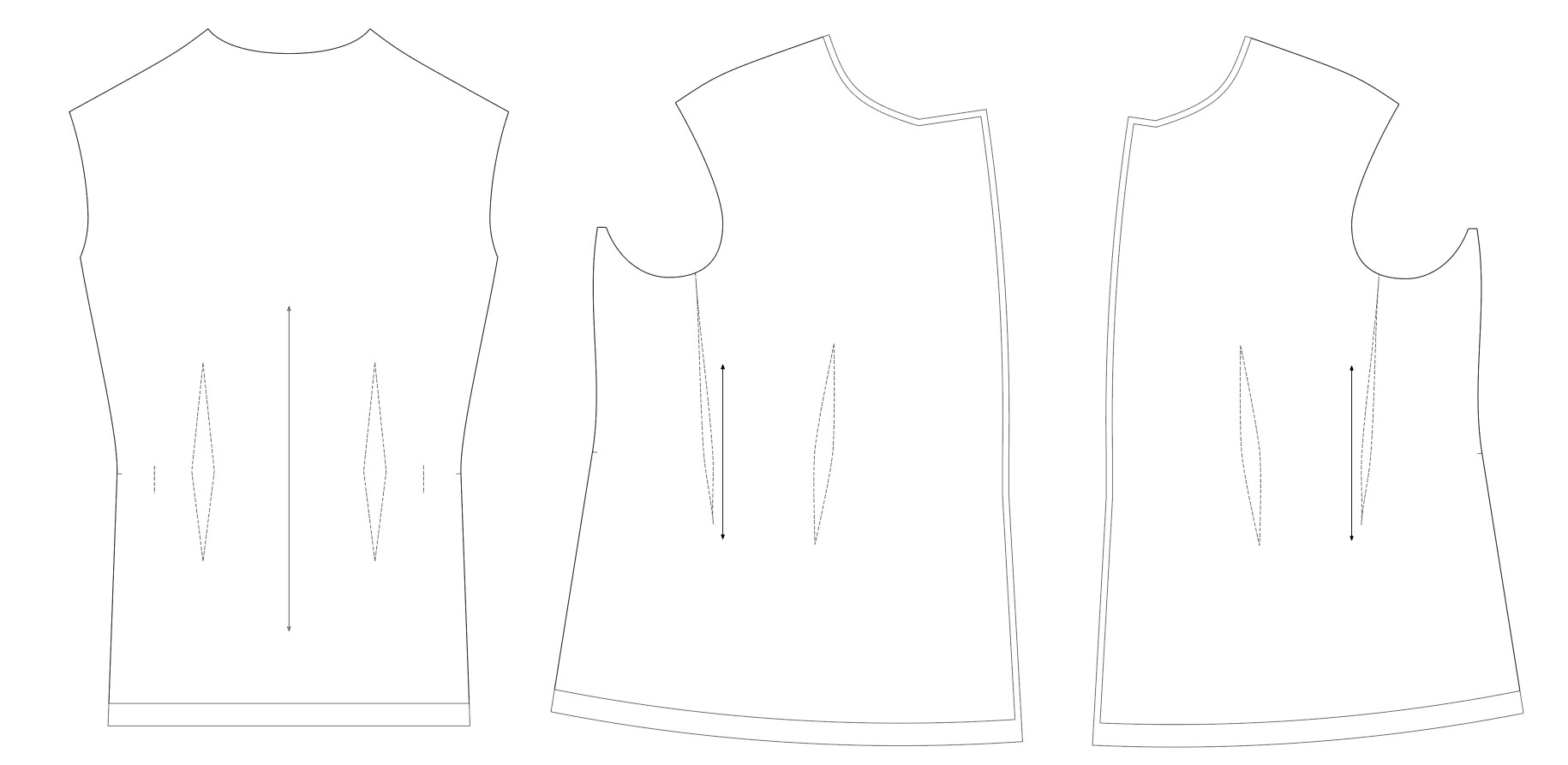
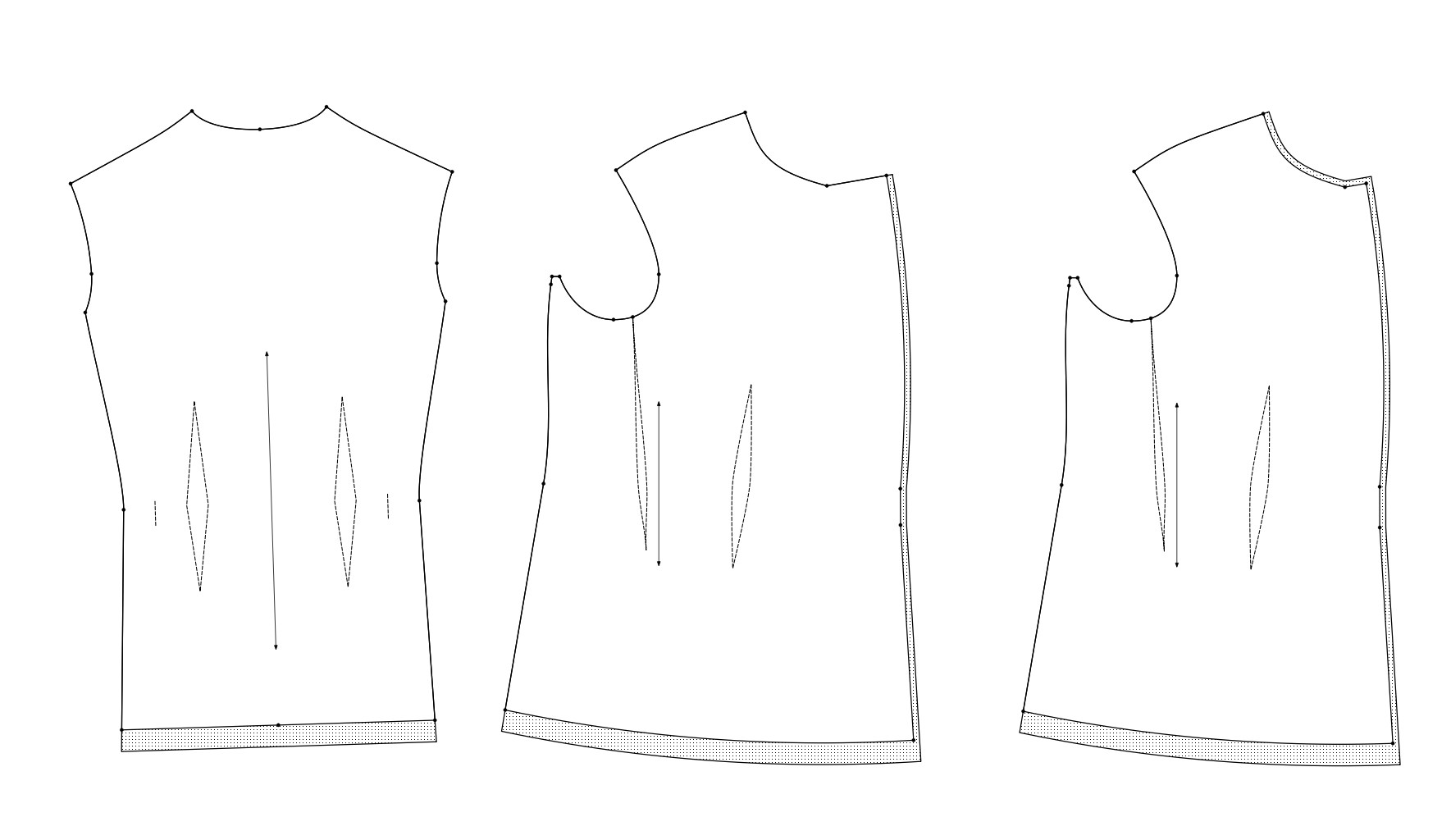
Exported the .SVG and opened it in Illustrator to get the other front piece mirrored and back piece straigthened out. Will have to look into adding parametric notches later on, ran out of time today but great to see this finally working and panning out. Can’t wait to get the toile underway and finally see some results.

The seam allowances are added where there was none included in the pattern instructions. Which is mostly collar + hem. And I just noticed I forgot to add the back collar allowance. At least I assume there should be some allowance there, as the collar is sewn there (and seems to match in length to the one given in the instructions).

2 Likes

Scratch that, I was too eager to post!

Collar length is correct (42 cm) in size 50, but in size 54 it’s massive 47 cm. It should be 45 cm. So there’s some kink in the parametres. Glad I checked it.

2 Likes

Like I mentioned, this is turning into a bit of a blog post, but since you’ve made the error of reading and replying, I will have to post here :grin: :innocent:

I’ve been reading about the local drafting system last night at home and a bit at work today. It turns out that a professor had published a study about domestic rural tailors from 1920’s to 1960’s just last year and it talks a bit about the drafting system!

Finally there’s some information for me about all this. It turns out that it is indeed based on Central European methods, as the main designer of the system had studied to become a master tailor in Germany. In short, it’s based very much on the same principles as Müller & Sohn, but it was primarily designed as a basic teaching system to be used here domestically so that all local tailors would have the same basic understanding and capability to share drafts with each other easier. Before this system, there was a noticeable division between rural tailors and urban tailors, where urban tailors were mostly used to British style made-to-measure clothing and rural tailors worked more on a “this has always worked and is close enough” style of drafting.

This domestic system relies on having a fairly basic setup for setting the measurements (chest circumference and height) which are then used to define the basic points of the pattern. The goal of the system is to get a toile that is close enough and with minor alterations can be made to fit most bodies easily. The idea is that the clothing from this system is a bit looser and less exact than Müller & Sohn/Rundschau allowing for simpler process that relies on fitting and alteration skills of the tailor more than producing a straight up fitting pattern from the instructions.

So it’s easier to teach the basics to someone, but relies more on skills one gains when being an aprentice. This explains why there’s so many things that are not explained - the goal was to provide just an outline that one would then adjust based on fitting. And the reason for this was that standardised, industrial clothing didn’t really become a thing here until 60’s. Before that tailors were responsible for making most of the clothing and there were so many of them everywhere. Even the literal translation for the word tailor means “cloths-maker” in English. So all this is quite a revelation and “AHA” moment for me. Too much time spent on learning M&S system and sheetmetal drafting has taught me to expect too detailed information from patterns of this system :slight_smile:

The good thing is that this gives me a mental permission to be a bit more interprative and artistic with how things are done, without expecting that some decisions are necessarily wrong. Does mean that I will have to make more toiles for fitting and adjustments in order to get the pattern I want.

Alas, thank you for reading my blog :slight_smile: This’ll give me some more courage and energy to figure out some changes to the collar measurements to see if I could get it to fit a bit better for all the sizes without having to do individual alterations size by size.

3 Likes

This is what is often referred to as a “proportinal” pattern, where the pattern is proportional to the chest (and waist). Systems like Crooborg’s Supreme system start off with the basic block with a proportional draft… but then you can apply direct measures or apply adjustments based on heght to refine the draft for a better fit. If you make a straight proportional draft it’s like “off the rack”, where as if you refine the pattern with direct measures it’s a “made to order”. In either case when a suit is made by a tailor it generally means there are fittings to make the suit fit. This also includes making alterations for things like drooping or sloped shoulders, etc.

3 Likes

I’m following your journey very closely and I think it will be an inspiration to others in the future, even, perhaps, 20 years from now. This is what the forum is all about… Sharing ideas, experiences and how to solve the problems.

So please don’t stop now. Let’s follow you to the end :smiling_face_with_three_hearts:

3 Likes

This is what is often referred to as a “proportinal” pattern, where the pattern is proportional to the chest (and waist). Systems like Crooborg’s Supreme system start off with the basic block with a proportional draft… but then you can apply direct measures or apply adjustments based on heght to refine the draft for a better fit. If you make a straight proportional draft it’s like “off the rack”, where as if you refine the pattern with direct measures it’s a “made to order”. In either case when a suit is made by a tailor it generally means there are fittings to make the suit fit. This also includes making alterations for things like drooping or sloped shoulders, etc.

Yup! Whenever I find an old tailors book online and check it, they are almost always calling their system a “proportional system.”

Based on what you’re saying, this domestic system is sort of a “proportional system, with a bit less details” -system, where you just have to use a bit more elbow grease to get a pattern out :slight_smile:

At the same time, I suppose that was just as well for your average rural tailor, who just made cheap suits and clothing for locals in a sort of a off-the-rack way.

I’m following your journey very closely and I think it will be an inspiration to others in the future, even, perhaps, 20 years from now. This is what the forum is all about… Sharing ideas, experiences and how to solve the problems.

So please don’t stop now. Let’s follow you to the end :smiling_face_with_three_hearts:

Haha, well I hope someone finds this useful!

I spent all day yesterday with pen and paper, trying to come up with a method to scale the collar in a different proportion to the the rest of the pattern, but still remain within reason and that would give me a proper size for the collar opening.

As most of the sizes use Variable “#Part” (which is essentially ((@ChestCircumference/2)+6)/54 from the instructions), I made a new variable #CollarPart. This is driven by a variable called #CollarFactor, which is just more or less arbitrary numbers that fit this particular pattern (perhaps others?).

So for example in size 48 the #Part returns value of 1 cm. I then have #CollarFactor with the formula “0,9645 - 0,385 x (#Part -1).” Here the 0,9645 sizes the #Part distance smaller and the 0,385 adjusts the rate at which the size changes when changing pattern size.

#CollarPart is then just simply driving a formula of #Part x #CollarFactor, resulting in 0,9645 in size 48. Essentially making the collar section ~96% of the instruction collar size.

In size 56 however the #Part is 1,14815 cm and the #CollarPart is only 1,0419.

This gives me the following measurements for the collar in the end (seam allowances are included in the actual measurements, here the length is just shown without it):

46 = 40 wanted → 40,08 calculated 48 = 41 wanted → 41,13 calculated 50 = 42 wanted → 42,13 calculated 52 = 43 wanted → 43,09 calculated 54 = 44 wanted → 44,00 calculated 56 = 45 wanted → 44,89 calculated

Since the collar shape is driven by a somewhat complicated set of guidelines, I couldn’t get these numbers to match exactly the rate no matter what I tried. So for now, I reckon this is close enough, since cutting + stretch are eventually going to mess up with this more than the calculated error margin gives me anyways.

Those that are more mathematically inclined can obviously comment on this calculation and I’m more than happy to try something else as well to get better results!

On another note, I am just slightly torn right now between having to add seam allowance to the collar or not. Unfortunately neither of the original jackets I’ve taken apart have their size stamps left, so I am not sure what sizes they are supposed to be originally. They’ve also obviously warped over their 80+ lifespan, so direct measurements off of them aren’t too reliable. They’ve also been sewn together by monkeys (seams go from anywhere from 0,5 cm to 1,5 cm wide, and they are cut all over the place with wobbly lines in some parts). Mass production issues, eh?

So I’ve tried t o compare the full back length and shoulder seam lengths but I just can’t tell anything about the sizing.

So right now I am slightly leaning towards adding 1 cm seam allowance on the collar and adding the collar to the cutline (or seam line in the right most piece). But it could also be that this was already calculated in the pattern. In either case, the collar length doesn’t really change as the shoulder seam allowance is there and just moves the spot where the collar should be sewn down in almost the exact same proportion.

Concidering that the full back length is supposed to be the same number as in the size table given, it would seem to me that there’s no collar allowance included in this drafting instruction and that I would need to add it to this.

Now I’ve got a whole lunch break to make a decision if I include it or not, then it’s off to preparing the first toile for tomorrow…

2 Likes

I’m pretty sure I saw something when I was going through cataloging all the Functions… ah, here it is:

rint(x). To round the answers to the nearest integer, encase the equation (“x”) in the rint function: rint(0,9645 - 0,385 x (#Part -1))

Though there’s always a possibility that with practice you’ll find that the non-integer answer was actually closer. I don’t know.

:unicorn:

3 Likes

Great idea, BUT… I am not trying to round it :slight_smile: That exact factor drives the spline curves (or rather, it drives the points where the curves and their guidelines begin), so they need to be this silly to work. I could always add more numbers, but at this level they gave enough control for this particular thing, without changing the shape of the rest of the jacket too much.

1 Like

Ah, I must have misunderstood this part:

:unicorn:

1 Like

Yes, it was a bit unclear I have to admit! :slight_smile:

What I meant there was that in size 46 the collar is mentioned as being 40 cm and with the formula the calculated collar size is 40,08 cm, which is close enough :slight_smile:

1 Like

I got the toile made yesterday and I have to say that this has to be the best 1st toile/test pattern I’ve ever done. The base is drafted in size 48, but with the power of Seamly and parametres, the size 54 was just as good.

I was most worried about the side seams, since they seem to be such different lengths even when calculating the seamlines. But since the final jacket are going to be (and my toile was too) pretty heavy weight wool, it seems to be exactly what it should be. The nearly 3 cm of “extra” fabric disappeared in the seam without any pulling, stretching or fiddling about. Just a nice and smooth seam. I’ve got to say, this has got to be one of the best feelings in my life, figuring all this stuff out and getting something out of it that works so well :slight_smile:

I was a bit worried about this part. While I was drafting this it seemed to me that this would be just one, smooth continuous curve. At some point I thought I have to take the side dart/intake seam allowance into account - but completely forgot that.

Turns out, it doesn’t matter that I drafted it as a single, smooth curve (even if in theory it should have a slight diffference in the angle). The seam here takes perhaps 6-8 mm of the length of the armhole curve and it all turned out just fine. In fact this might just “automatically” give my undersleeve draft enough ease in the end. So all is fine.


On another note. I think I wasted an day adjusting the collar.

As I was was reading the various instructions from the 1928 book on this drafting system, I realized that what I had understood about the collars was probably wrong. The joy off speaking a language, where the syntax and sentence structure has changed enough in 100 years that the way things are expressed Back in the Day can have slightly different meaning today.

So I think that what is talked about in this is actually not the collar length itself, but the circumference of the users neck. So my collar doesn’t have to be 40 cm in size 46, I suppose it can be whatever the pattern produces. Frankly, I’ve never before really paid attention to the neck sizes in my drafts, so I don’t know.

But luckily, it’s all parametric.


In any case, it’s time to start planning on the sleeve next. I have a few older sleeve drafts that I’ve had to make from scratch essentially (as the sleeve proportions and shape were so different from what the internet & modern books showed me).

The 1928 sample “standard sleeve” is like this:

My instructions have this wonderful part: “The sleeves are standard jacket sleeves, with openings at the cuffs; however, the sleeve cap is relatively short and wide, and the under-sleeve is long from the top.”

So I will probably use this as a base.

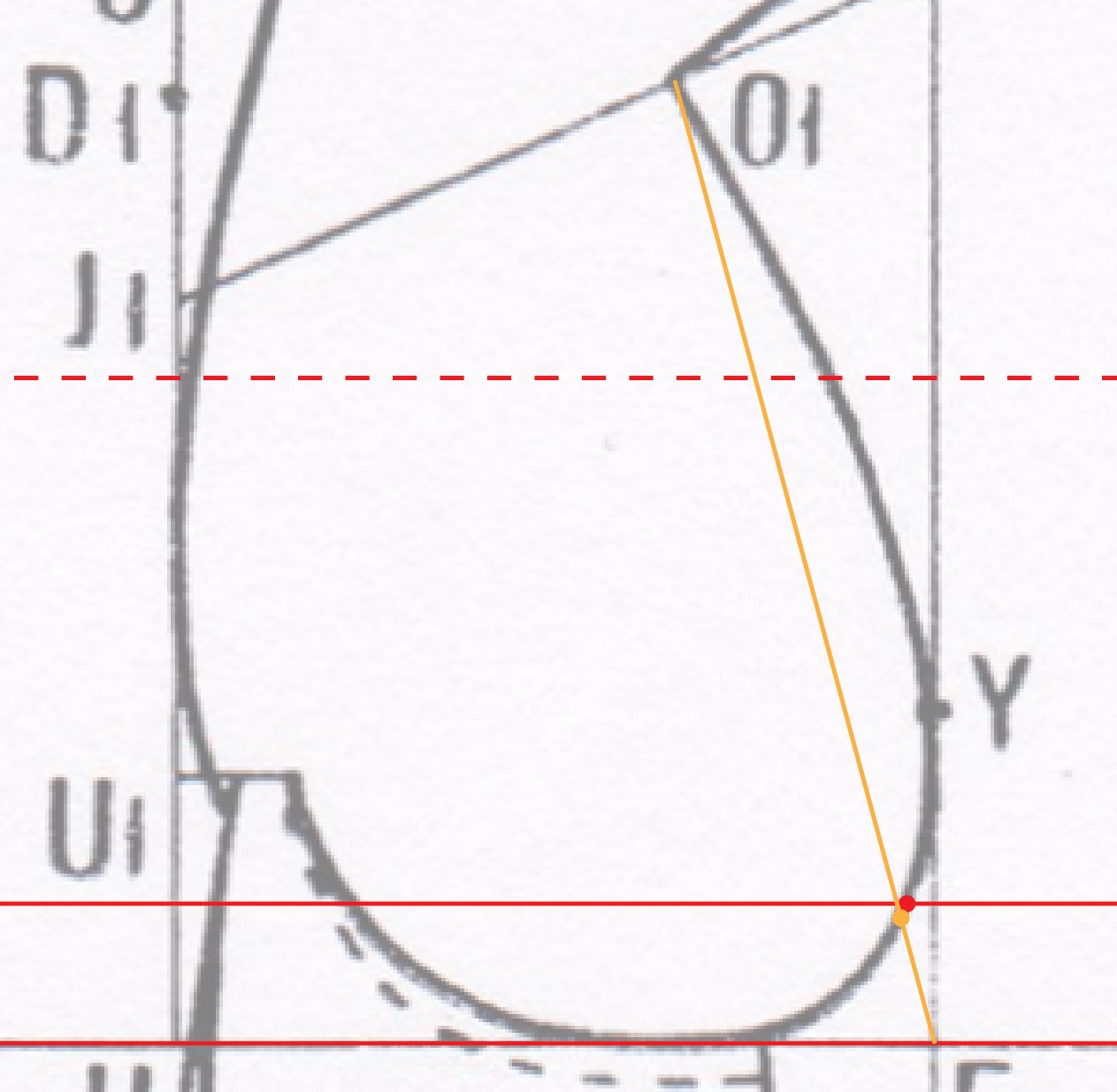
By the way, the 1928 book says that the front balance point is on the front curve, 2,5 cm up from the chest line. Here’s a quick example where it’d end up in this draft:

Red dot is 2,5 cm above the chest line. I noticed it passes close to a orange line going from the front shoulder seamline to point E. Is it possible that the 2,5 cm is just a quick and dirty way to get the point there and perhaps this orange line & dot could also be… correct? I don’t know, I feel like I am starting to see correlation where there is none with some many lines going around the pattern :smiley:

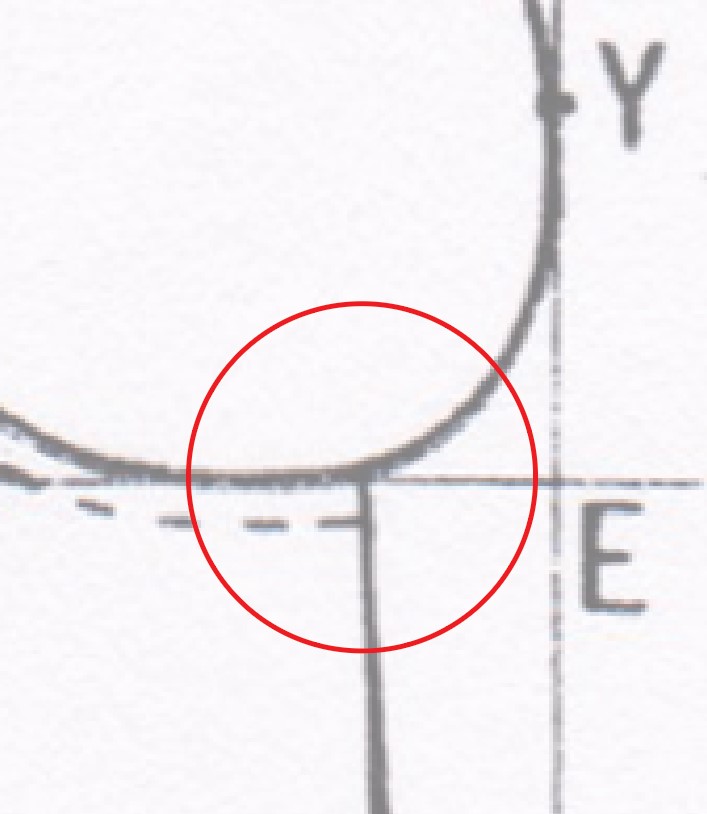
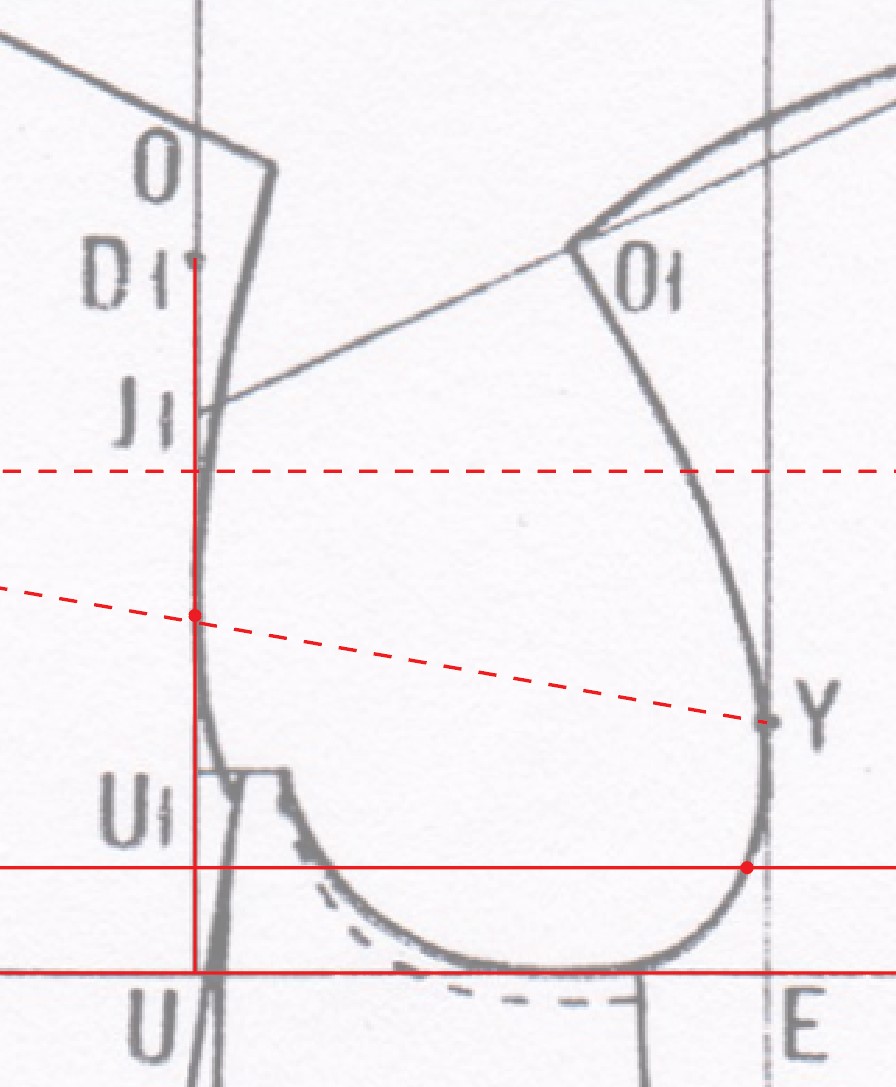
On the same note; it says that the “back balance point is halfway between back and chestline” - I’ve drawn it here with a horizontal dashed line:

Once again I’m seeing patterns here. The point Y is not used in anything in any of these instructions. Both the book and all the other instructions based on it all tell you to mark Y here, but it is never mentioned again.

Now, this got me wondering. The red dot you see on the U - O line is where I just randomly put a point in my draft for the curve points. The dashed line going past it to Y is from the halfway point to Y. Seems pretty close; could it be used for that? Am I just seeing patterns where there are none?

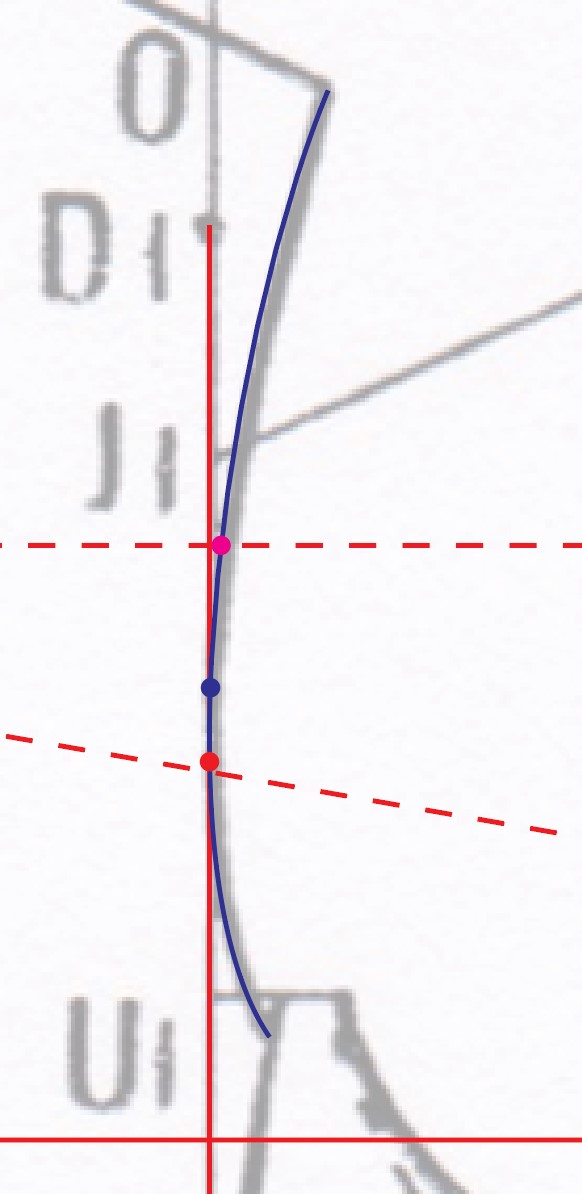
Going even further looking at this; the magenta dot is on that halfway line where the instructions say it is. The red one is just the tangent point I have. Blue is where the seam of the sleeve meets the jacket in the originals (and where they have alignment marking on the garment). Is this useful information for me at all? The blue point is essentially halfway between the shoulder point O and chestline point U. I could perhaps use that? How would it relate to the sleeve draft?

At the same time, the sleeve seam in the front actually lines up with that “point 2,5 cm above the chestline” neatly. However, the shoulder line seems to be much higher in the originals than in this drafting instruction! The front curve is 19,5 cm in mine,but based on the originals proportions it should be 21,5 cm. So raising point J1 then perhaps? The back seam lengths are a match proportionally.

One more question related to the point Y: There’s another point that is marked in all these that is never used for anything - D1. Any ideas what it might be in relation to?

2 Likes

The magic of working with wool. :slight_smile:

You just have to make sure the wool has been sponged or it could be disaster. We once did a job for a bunch of Union officers coats, and my partner found this “bargin” gaberdine wool. Great… I had most all the pants & jackets cut, when my sewers started to notice the fabric was shrinking width wise as they were steaming and pressing. I mean really SHRINKING. We had to scrap everything, order some new fabric and recut everthing. Eventually we used the scrapped pants and coats. We pre shrunk all the pieces and turned what was like a large into a small… or mediums into kids sizes.

That was a big lesson learned… where we then always tested or preshrunk wools or poly wools.

2 Likes